
Why software testing tools change everything
Engineering velocity has outpaced QA capacity. Every sprint ships more code than testers can properly validate, regressions reach production unchecked, and release confidence erodes.
QA Wolf provides the software testing tools that make verification possible again. We map, automate, run, and maintain your tests in a platform built on learnings from 100 million+ test runs.
AI Mapping explores your entire app on its own — planning its approach, navigating every page and flow, and mapping 200+ test cases in minutes with zero human intervention.

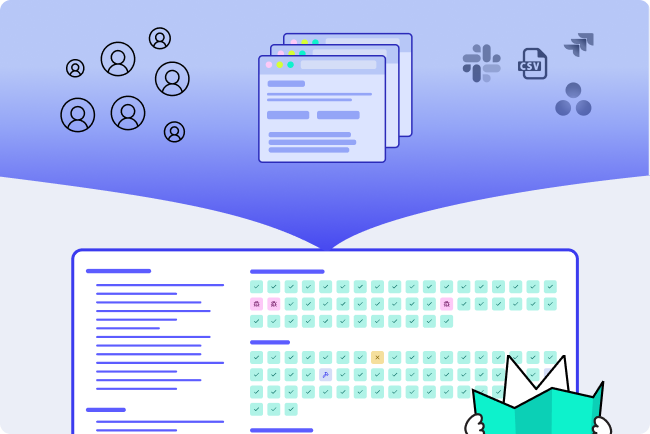
Mapping AI: Testing tools in software engineering that map every workflow
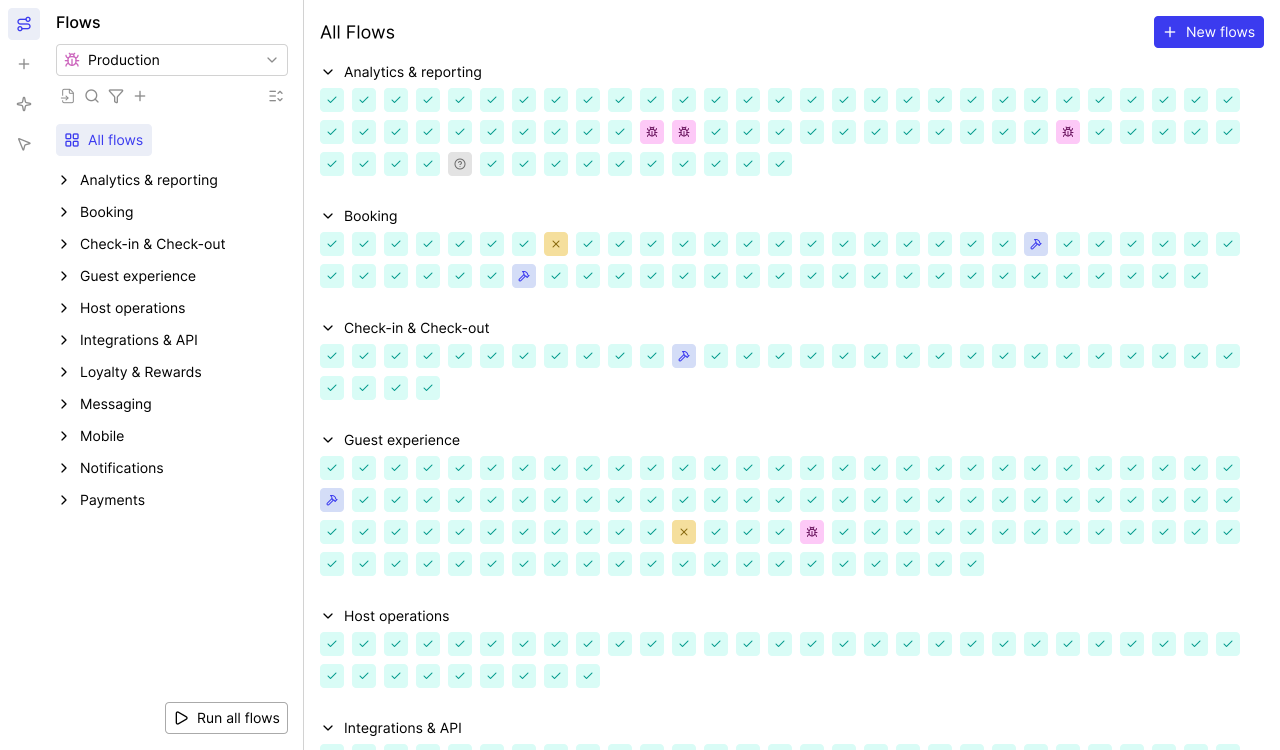
Manual test plans are outdated as soon as they’re written. Coverage erodes with each new feature and regressions enter through unmapped paths. QA Wolf is the software test tool that maps coverage automatically.
- Explores your application autonomously to surface tests.
- Outlines hundreds of test cases in one pass.
- Spots new features as ship them and revises test coverage.
- Chats in natural language to define assertions.
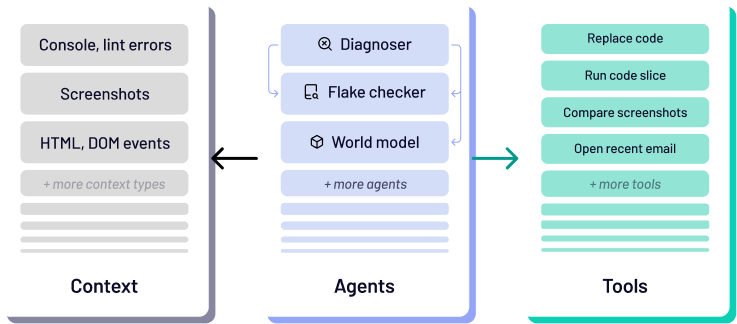
Automation AI: Next-level software testing tools for test generation
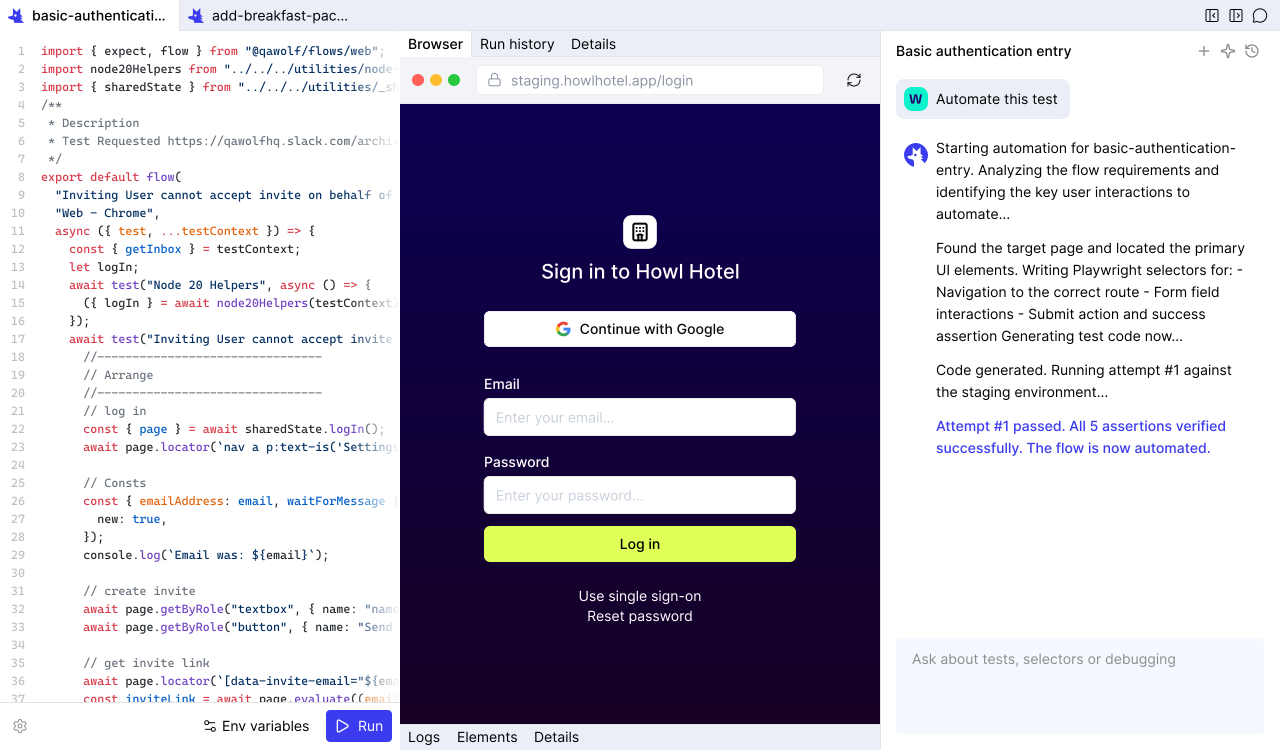
Unreliable scripts burn engineering hours. QA Wolf delivers software testing tools that produce test code and update it.
QA Wolf's Automation AI:
- Writes all tests in Playwright and Appium. Real code, not scripts.
- Resolves timing challenges, DOM changes, and runtime errors autonomously.
- Auto-repairs broken tests (selectors, data, environment, logic failures).
- Produces 100% deterministic and reproducible test runs.
- Export the code at any time. No vendor lock-ins.
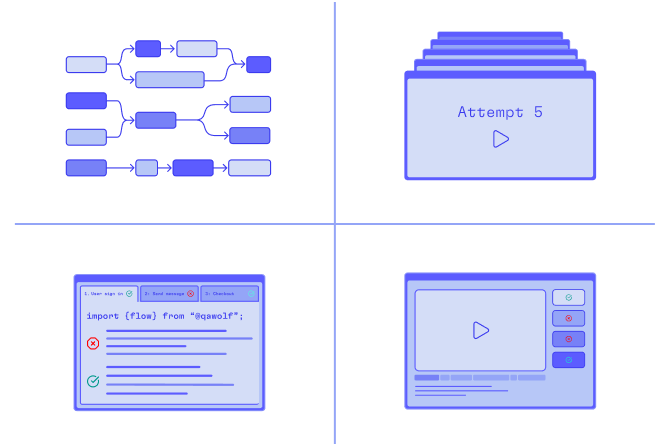
Run infra: Software testing tools for unmatched execution speed
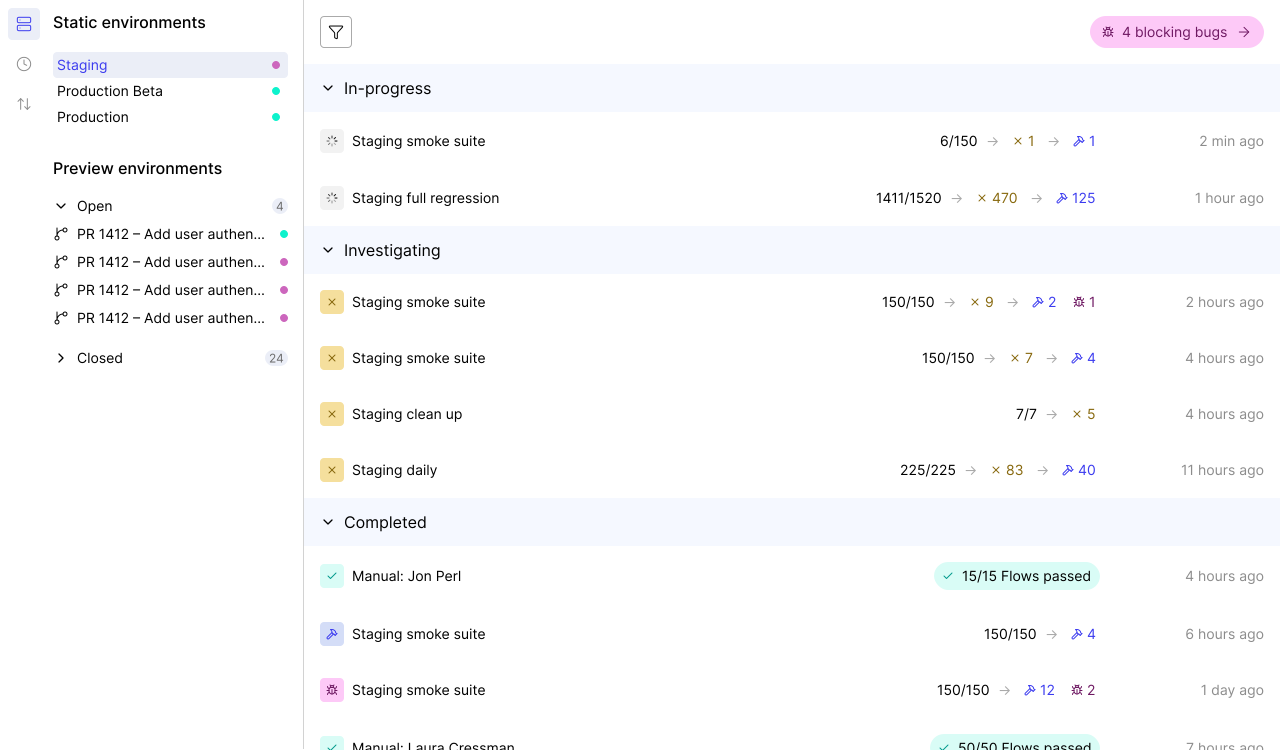
Infrastructure constraints turn test suites into release blockers. QA Wolf offers software testing tools with infrastructure that unblocks teams.
- Executes tests 100% in parallel. Each test in an isolated container.
- Quick starts with pre-warmed runners and GPU emulators.
- DAG-based orchestration for multi-step flows.
- Records on every run: Playwright traces, video replays, and network logs.
- Files bugs to Jira, Linear, or Asana with auto-diagnosed failures.
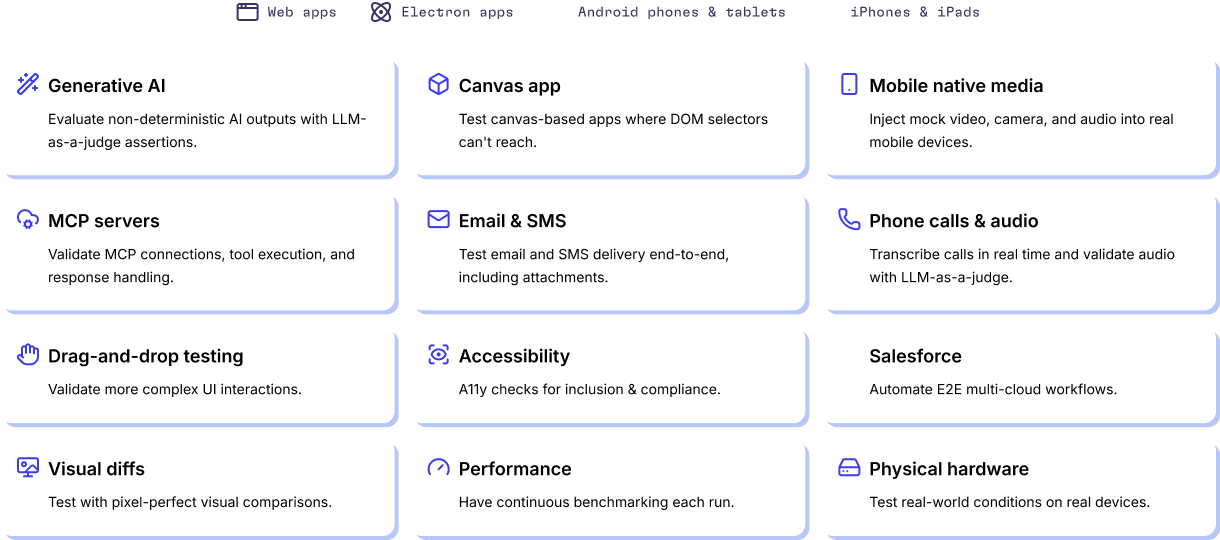
The only software testing tools for complex apps
Most software testing tools cover basic web flows and call it done. QA Wolf handles the workflows other testing tools in software engineering can’t tackle.
- Web: Chrome, Firefox, Webkit (Safari).
- Mobile: In-house device farm for iOS (real iPhones and iPads). Android GPU emulators.
- Communication channels: Test email and SMS verification flows.
- GenAI evaluation: Employs language models as quality assessors.
- Advanced UI: Canvas API, drag-and-drop, file uploads, browser extensions, MFA.
- APIs and databases: Seed test data, validate read/write operations.
- MCP servers and feature flags: Software testing tools that can test multiple experimental variants and MCP deployments.
- Enterprise platforms: Salesforce, Oracle, and custom internal tools.
Manage 13x more tests with QA Wolf's software test tool
QA Wolf helps engineers manage 13x more tests than the average QA tester.
- Cover more cross-platform flows, edge cases, and multi-user scenarios.
- Achieve software testing coverage in just weeks.
- Reclaim engineering hours from writing, debugging, and maintaining test suites.
An AI Engine designed from the ground up for QA
You’ll get the results you’re after — we guarantee it.






Frequently Asked Questions
Testing tools in software engineering span unit test frameworks (Jest, pytest), integration test libraries, and end-to-end automation platforms. E2E tools deliver the highest impact on release velocity because they validate complete user workflows across the stack. The critical differentiator among software testing tools: do they produce real, maintainable code or proprietary scripts that create lock-in? QA Wolf generates open-source Playwright and Appium code through 150+ specialized AI agents, runs tests in fully parallel isolated containers, and auto-repairs broken tests—going beyond selector fixes to handle data, logic, and environment failures. SOC2 Type 2 and HIPAA compliance make it ready for regulated industries.
Match your software testing tools to three realities: your application complexity, your team's engineering capacity, and your release cadence. If you ship daily and test across web, mobile, and APIs, you need testing tools in software engineering that automate the full lifecycle—not just execution. QA Wolf covers mapping, test generation, parallel execution, self-healing maintenance, and bug reporting in one platform. Evaluate code quality (real Playwright/Appium vs. proprietary), execution speed (100% parallelism, isolated containers), and maintenance burden (auto-repair across selectors, data, and logic). Teams with high-velocity release cycles and complex applications see the strongest returns from QA Wolf's software testing tools.
Most software testing tools support web browsers but lack real mobile testing infrastructure. True mobile coverage requires GPU emulators for Android and physical devices for iOS—not browser-based device simulation. QA Wolf runs Android tests on GPU emulators and iOS tests on an in-house device farm with real iPhones and iPads. Every mobile and web test executes in its own isolated container with full parallel support. QA Wolf's AI agents generate both Playwright (web) and Appium (mobile) code, so teams maintain a single testing tools in software engineering workflow across platforms rather than juggling separate tools and frameworks.
Software testing tools integrate with CI/CD through APIs, CLI triggers, or native pipeline plugins. The most effective integration runs automated tests on every PR merge, gate deployments on test results, and reports failures with actionable diagnostics. QA Wolf triggers automatically from your CI pipeline, runs up to 100% of tests in parallel, and returns results with video replays, network logs, and Playwright traces. Failures include auto-diagnosed root causes and can file bugs directly to Jira, Linear, or Asana. DAG-based orchestration (Run Rules) coordinates complex test sequences—multi-step, multi-user flows—without custom pipeline scripts. This integration depth means software testing tools that fit your workflow, not the other way around.